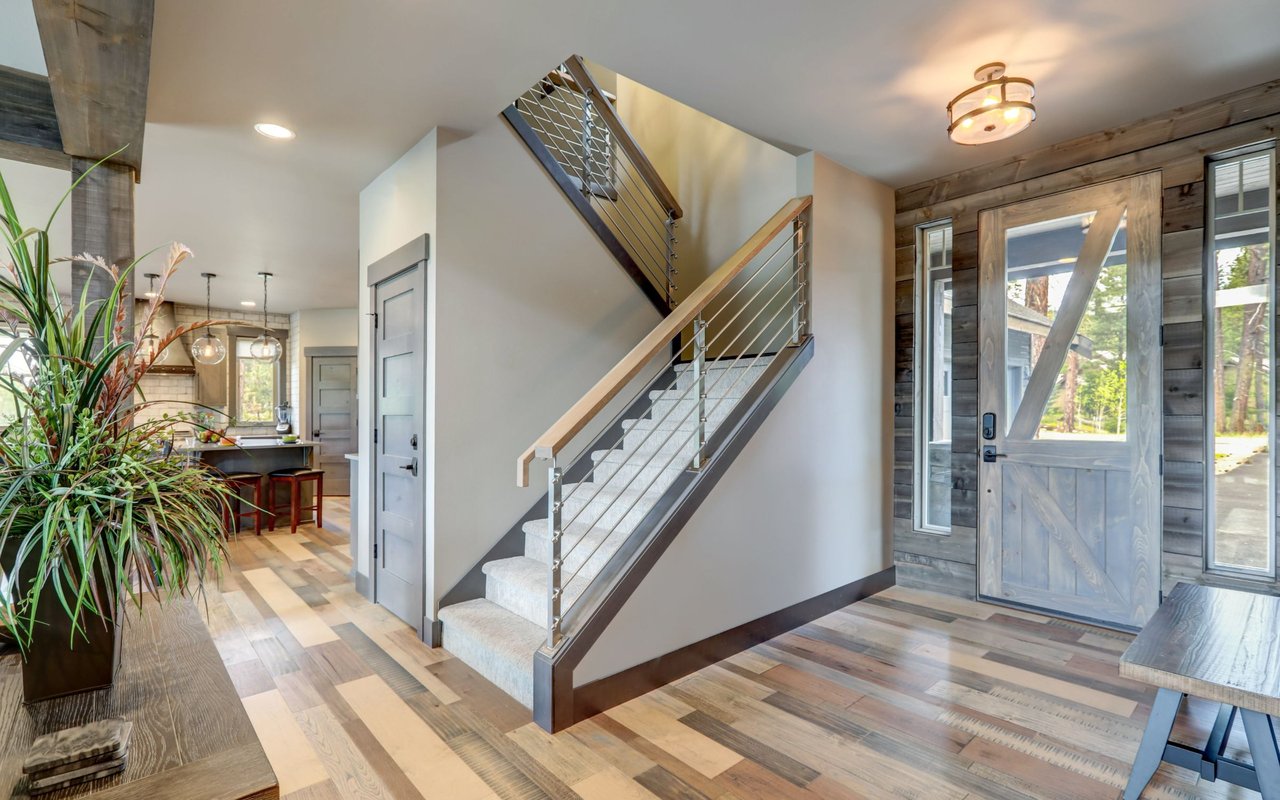
Tumalo Home Prices vs Bend: Why Acreage Sells Higher
August 13, 2026
August 13, 2026
Picture a buyer running two searches side by side. One is for Bend's west side, in Northwest Crossing, Tetherow, or River West, where walkability to downtown and river access anchor the price. The other is for Tumalo, ten minutes northwest, where the streets turn to gravel and the nearest sidewalk is a memory. The Bend search returns a median in the $900,000s. The Tumalo search often comes back higher.
That result looks like an error. Tumalo has no downtown core, no Drake Park, no Old Mill District. By the usual logic of real estate, it should trade at a discount to Bend's premium in-town neighborhoods, not a premium over them. The reported Redfin figure puts Tumalo well above Bend’s premium in-town neighborhoods. The reason has almost nothing to do with square footage, finishes, or curb appeal. It has to do with what Oregon law allows a landowner to do with dirt, and what's already attached to that dirt in the form of water.
A local buyer-insights breakdown published in February 2026 split Bend cleanly along Highway 97. West side neighborhoods, including Northwest Crossing, Tetherow, and River West, were running a median above $900,000, driven by walkability to downtown, Drake Park, and the river. East side neighborhoods like Larkspur and Mountain View, the entry points for many first-time buyers, sat in the $500,000 to $600,000 range.
Tumalo sits outside that frame entirely. One reported figure for the area is:
| Source | Tumalo median | As of |
|---|---|---|
| Redfin | $1.6 million | most recently reported figure, dated January 2025 |
For comparison, Bend's citywide median sale price over the three months ending May 2026 was $704,000, down 6.4 percent from the same period a year earlier. The Redfin figure is well above that number. Tumalo isn't tracking a discount version of Bend. It's tracking as something else.
The mechanism sits in the zoning map, not the market. LegalClarity describes Oregon's Exclusive Farm Use rules as restricting nearly all nonfarm development on designated agricultural land and tightly limiting what owners may build and how they may divide their land. Legal analysts who write about Oregon land use note that EFU rules leave almost no room for development unrelated to farming, and that a landowner who runs afoul of those rules can face rollback tax penalties reaching into the tens of thousands of dollars, on top of injunctions and fines.
Oregon Revised Statutes 215.283 and 215.705 spell out the specific tests a property has to clear before a new dwelling gets approved, and they weigh things like whether the parcel qualifies as high value farmland and whether a new home would materially alter the existing land use pattern in the area. None of that is a formality. It is the reason a five-acre or twenty-acre Tumalo parcel functions less like a buildable lot and more like a fixed, non-reproducible asset. Bend can, in theory, add density. Tumalo, zoned this way, mostly cannot.
That scarcity gets priced in. When a buyer pays for acreage in Tumalo, they aren't paying for extra house. They're paying for one of a limited number of parcels that Oregon law will actually let someone build on, and that number isn't going up.
The second piece is easy to miss on a listing sheet and expensive to miss at closing. A large share of Tumalo acreage carries irrigation water rights, and the Oregon Water Resources Department explains that those rights are tied to specific acres, not to the property as a general concept.
Two irrigation districts do the work here. Swalley Irrigation District holds water rights on the Deschutes River dating back to 1899, delivers to roughly 700 customers across a district that runs from Bend north through Tumalo, and as of 2026 has piped about 64 percent of its canal system, with the rest still open ditch. The average Swalley customer irrigates about six acres. Tumalo Irrigation District, a separate district based in Bend, delivers water to approximately 680 landowners through 65 miles of canals and pipelines drawn from Tumalo Creek and the Deschutes River, and its own handbook tells patrons they'll generally need 10 to 20 acres of water right to flood irrigate a property to satisfaction.
Those numbers matter because a buyer should confirm whether a water right is included in the sale and which specific acres it covers. A buyer who assumes "acreage in Tumalo" means "water included" can find out during due diligence that the property's water-right details need closer review.
A property with confirmed water-right details and one with unclear water-right details can look identical on a plat map and price very differently once a buyer's attorney or title company starts asking questions.
This is the second half of the mechanism. Tumalo's price floor isn't set by the house. It's set by the acreage's legal status under EFU zoning, plus whether that acreage carries water rights that actually convey. Bend's west side sells walkability. Tumalo sells a scarce, regulated asset that happens to have a house on it.
Tumalo is a low-volume market, thin enough that Redfin's own Tumalo page hasn't been refreshed with a new median since January 2025, a full year and a half before this writing. When only a handful of properties close in a given month, one large equestrian estate or high-acreage sale can swing the reported median by hundreds of thousands of dollars, the same way one outlier test score can drag a small classroom's average around in a way it never would in a school of a thousand students.
A buyer using a portal median to set a budget for Tumalo is working with a number that may reflect one unusual transaction from over a year ago rather than the going rate for a typical parcel today. The more reliable approach is to look at what's currently active and pending in the specific price band and acreage range that fits the plan, rather than anchoring to a single stale median pulled from a market this thin.
For buyers, the practical checklist looks different in Tumalo than it does for an in-town Bend purchase:
For sellers, the same facts cut the other way. A Tumalo listing that leads with square footage and finishes is underselling the asset. The water right, its acreage coverage, and the property's standing under EFU zoning are the parts of the deal that justify the price relative to anything comparable in town, and they deserve the same attention in the marketing as the kitchen does.
Does every property in Tumalo have irrigation water rights? No. Water rights are tied to specific acres and specific certificates, and not every parcel in the area carries them. Confirming rights with the relevant district is a due diligence step, not an assumption.
Can I split a Tumalo parcel into two smaller lots? Generally, Exclusive Farm Use zoning is built to discourage land division for non-farm purposes, and any division request has to clear the standards in Oregon's EFU statutes. This is worth confirming with Deschutes County planning staff before treating future subdivision as part of a property's value.
Why can Tumalo's median swing sharply? Low sales volume. A district with only a handful of closings in a given month can see its median swing sharply based on one or two large-acreage or equestrian sales rather than any broad shift in value.
Buying or selling acreage in Tumalo means pricing a different kind of asset than a home in town, one where zoning and water rights do more work than the square footage on the listing sheet. If you're weighing a Tumalo property against something on Bend's west side, or trying to price a Tumalo parcel for sale, Erica Callfas can walk through what the acreage, the water right, and the zoning actually mean for your numbers. Let's Connect.
This article is general information, not legal, tax or financial advice. Consult a qualified professional about your situation.
Stay up to date on the latest real estate trends.



Contact Erica today to learn more about her unique approach to real estate and how she can help you get the results you deserve.