Riverfront in River West: What Seasonal Flows Mean for Buyers
September 17, 2026
September 17, 2026
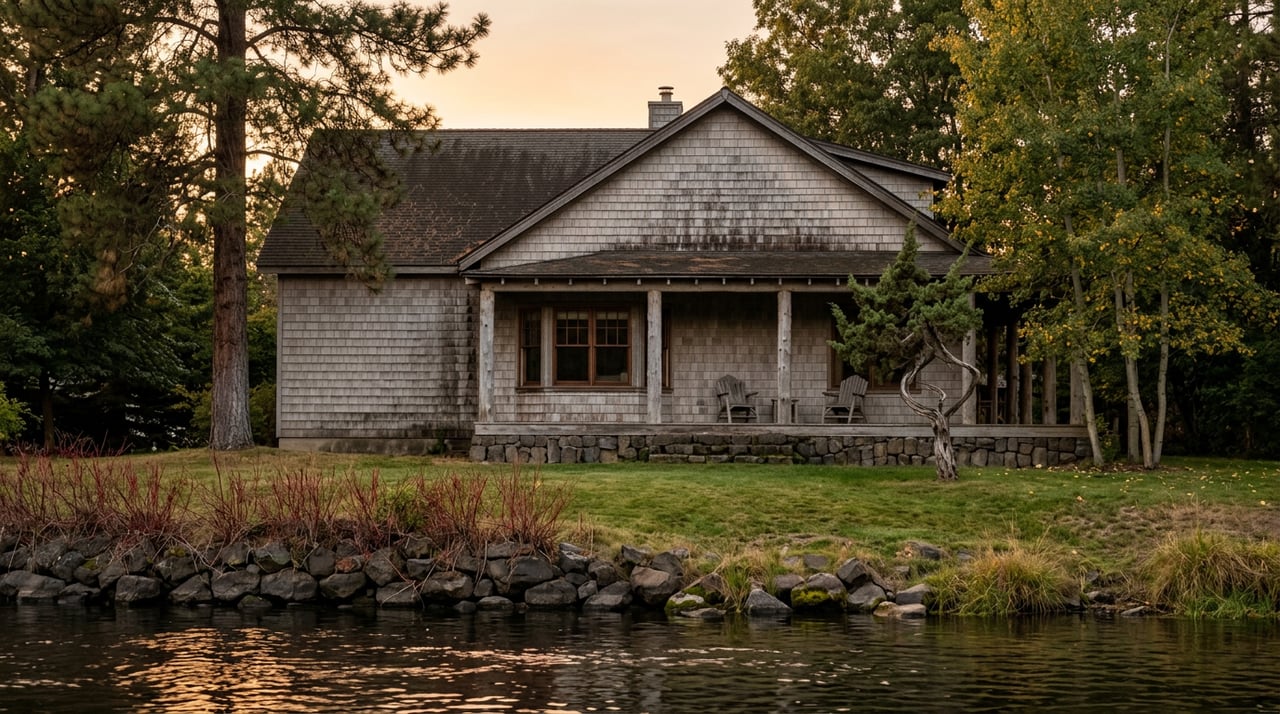
Walk a riverfront showing in River West on a July afternoon and the Deschutes does most of the selling for you. The whitewater park is loud with tubers and surfers. The current pushes hard past the bank. Drake Park's lawn is full, and the agent walking you through the back door doesn't need to say much beyond "listen to that." It's a convincing pitch.
It's also a seasonal one. The river running past that house in July is not behaving the way it would if left alone. It's running on a schedule set by an irrigation district working off a reservoir well south of town, and by November, the same stretch of water will drop to a fraction of what you saw on your tour. Buyers who fall for the river in summer often haven't looked closely at what it does the rest of the year, and that gap matters more for a purchase decision than a single walk-through can show you.
The Deschutes through River West isn't simply melting off Mt. Bachelor and finding its own level on the way north. Wickiup Reservoir, well south of Bend, holds back winter flow and releases it deliberately each year from roughly mid-April through mid-October to meet irrigation demand. That water travels downstream, passes through Bend, and is diverted into canal systems operated by the Central Oregon Irrigation District before it continues north. Because the diversion point sits at Bend, the stretch running through River West and downtown is elevated during irrigation season, carrying water that's on its way to being pulled off for farms and pasture, not water that arrived there on its own timeline.
Come the end of irrigation season, the district turns the tap the other direction. Releases from Wickiup drop sharply so the reservoir can refill for the following year's allotment. Under the Deschutes Basin Habitat Conservation Plan, the district is now required to keep a minimum release of around 100 cubic feet per second through the winter to protect Oregon spotted frog habitat. Before that requirement existed, winter flow out of Wickiup could fall as low as roughly 20 cfs from seepage alone. Either way, it's a small fraction of what moves through the same channel in July.
None of this is a secret to the water managers, the conservation groups tracking the basin, or the anglers who plan trips around it. It's a seasonal detail worth considering during a summer open house.
What that seasonal swing means in practice is that a lot of what draws people to riverfront property in River West is calendar-dependent. The whitewater park's surf wave needs volume to work. Tubing from Riverbend Park down toward Drake Park needs enough flow to float on, not wade through. Even the sound of the river through a bedroom window changes with the season, from a rush in summer to something closer to a murmur by midwinter.
Bend Park & Recreation District staff have watched this transition happen every spring as releases ramp back up. In a Bend Bulletin account of a past spring turn-on, Ryan Richard, the district's official "wave shaper," described the transition simply: "the wave is growing every day." That's the version of the river that photographs well and draws foot traffic to Galveston Avenue and the Old Mill District downstream. It is not the version you'll be living with in January.
The seasonal rise and fall isn't just a lifestyle detail. It's also the reason Bend Park & Recreation District is currently planning one of the largest capital projects it has taken on for the river corridor. According to reporting from the Bend Source, the district is moving forward with a major overhaul of the Bend Whitewater Park to address bank erosion, channel scour, and safety issues that have built up since the park opened in 2015. A study from consultant Recreation Engineering and Planning found that even the minimum recommended fixes, filling scour holes, removing hazardous boulders, and reconstructing eroded banks and channel walls, would run between $5 million and $9 million, with a fuller scope of improvements reaching as high as $12 million.
The district has already completed a related project at Miller's Landing across the river in 2025, and a similar erosion-focused project at Columbia Park downstream is expected to begin construction before the end of this year. Landscape architect Ian Isaacson, who is overseeing planning for the district, has said a project timeline is still being finalized as the district works through permitting with the various agencies that have a say over anything built along the Deschutes.
This is the same river that runs past River West's private lots. The forces causing scour and bank loss at the whitewater park don't stop at a property line. They're a byproduct of the flow swings that make the channel run high in summer and low in winter, and they're a reasonable thing to ask about if you're evaluating a parcel with direct river frontage, not just the parks that get the headlines and the repair budgets.
A few practical steps make sense before you weigh a River West riverfront property against anything else on your list:
None of this makes riverfront property in River West a bad idea. It's still one of the most walkable, established parts of Bend, close to Drake Park, the Old Mill District, and the shops and restaurants along Galveston Avenue. The point is simply that the river itself is a managed system, not a fixed backdrop, and understanding how it's managed changes what you're actually pricing in when you compare one riverfront lot to another.
Does the low winter flow mean the flood risk is lower too? No. Flood zone designations are based on mapped risk, not the water level on the day you happen to look. Flood insurance requirements are worth checking year-round.
Will the Whitewater Park construction affect River West this year? The related Columbia Park erosion project is expected to begin construction before the end of 2026. As of this summer's reporting, the district hadn't finalized a full timeline for the larger Whitewater Park overhaul itself, so specifics on scope and duration are still being worked out with regulatory agencies.
Is the summer river actually higher than it would be naturally? Yes, for the stretch through Bend. The flow you see in July is largely irrigation water on its way to being diverted downstream at Bend, not a natural summer high driven by snowmelt timing alone.
If you're weighing a riverfront lot in River West against other options in Bend, it helps to talk through what the property actually delivers across a full year, not just the month you happened to tour it. Erica Callfas works with buyers across River West and Central Oregon who want that kind of grounded read before they commit. Let's Connect.
This article is general information, not legal, tax or financial advice. Consult a qualified professional about your situation.
Stay up to date on the latest real estate trends.


Contact Erica today to learn more about her unique approach to real estate and how she can help you get the results you deserve.